Essential Marketing Materials for Small Business Success
Published on
Effective marketing materials for small business are more than just bits of paper; they’re the tangible tools you use to build brand recognition, establish professional credibility, and, most importantly, drive customer action. Think of them as your own marketing toolkit, where every item from a simple business card to an eye-catching banner has a specific and vital job to do.
Building Your Essential Marketing Toolkit
In a crowded market, a well-designed flyer or a quality business card can create a memorable connection that a fleeting digital ad often misses. They’re physical proof that your brand exists, a real-world handshake that leaves a lasting impression. This holds true whether you're a local coffee shop, a freelance tradesperson, or even running a political campaign.
The trick is to assemble a versatile marketing toolkit tailored to your specific needs. It’s not about having one of everything, but about choosing the right tools for the job. Your toolkit should be built around three simple but powerful goals: getting noticed, being trusted, and inspiring action.
The Three Pillars of Your Toolkit
This simple hierarchy shows how a well-stocked marketing toolkit supports your business goals from the ground up.
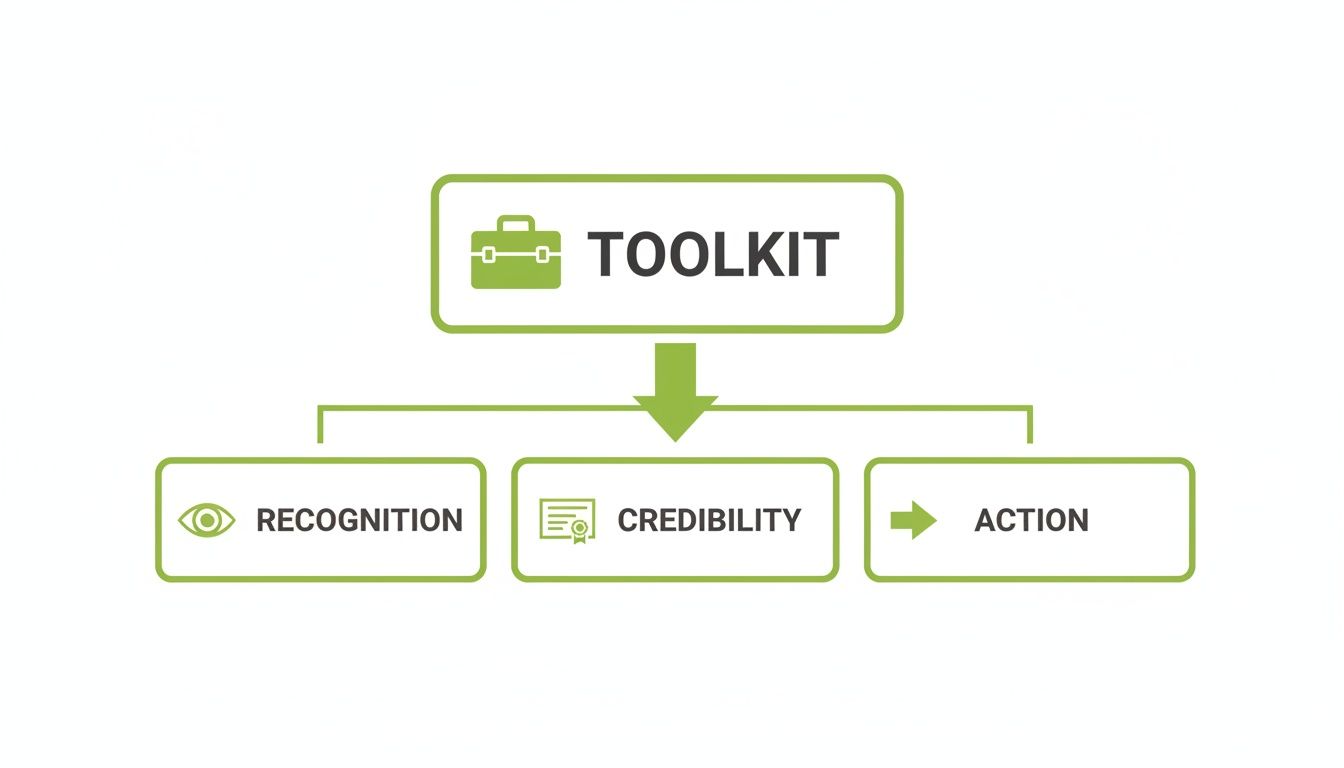
As you can see, every piece of print you create should aim to achieve at least one of these outcomes. This is how you turn your marketing spend into a measurable investment.
For UK small businesses, which make up a staggering 99% of all businesses, print materials are proving to be incredibly powerful. Research shows a huge 89% of people remember receiving a flyer, and nearly half a solid 48% take action after getting one. These numbers are a powerful reminder of why tangible items remain a cornerstone of any smart marketing plan.
The Foundational Marketing Toolkit for UK Small Businesses
To help you get started, here's a quick look at the core materials every small business should consider. Think of this as your starter pack for building a solid marketing presence.
| Material Type | Primary Purpose | Best Used For |
|---|---|---|
| Business Cards | Professional Networking | Making a great first impression at meetings and events. |
| Flyers & Leaflets | Promotions & Information | Announcing sales, events, or explaining your services in detail. |
| Banners & Posters | High-Visibility Advertising | Attracting attention at trade shows, markets, or outside your premises. |
| Stickers & Labels | Branding & Packaging | Adding a professional touch to products, packaging, and correspondence. |
| Menus | Product Display | Clearly presenting food, drink, or service options for hospitality businesses. |
| Branded Packaging | Customer Experience | Creating a memorable unboxing experience and reinforcing brand identity. |
This table covers the basics, but the real magic happens when you choose the right tools for your specific goals and make them work together.
Bridging Print and Digital
A modern marketing toolkit has to connect your physical efforts with your online presence. One of the simplest and most effective ways to do this is by adding QR codes to your print designs. Getting to grips with what QR codes are used for can unlock new ways to get customers from your flyer to your website in a single scan.
A well-chosen marketing material does more than just share information; it tells a story, reinforces your brand's quality, and gives potential customers a reason to engage. It’s a silent salesperson working for you around the clock.
By thinking strategically about your materials, you move from just printing items to building a cohesive system that supports every part of your business. The following sections will dive deeper into specific materials, helping you select and design the perfect tools for your unique goals.
Crafting Your Brand Identity with Everyday Essentials
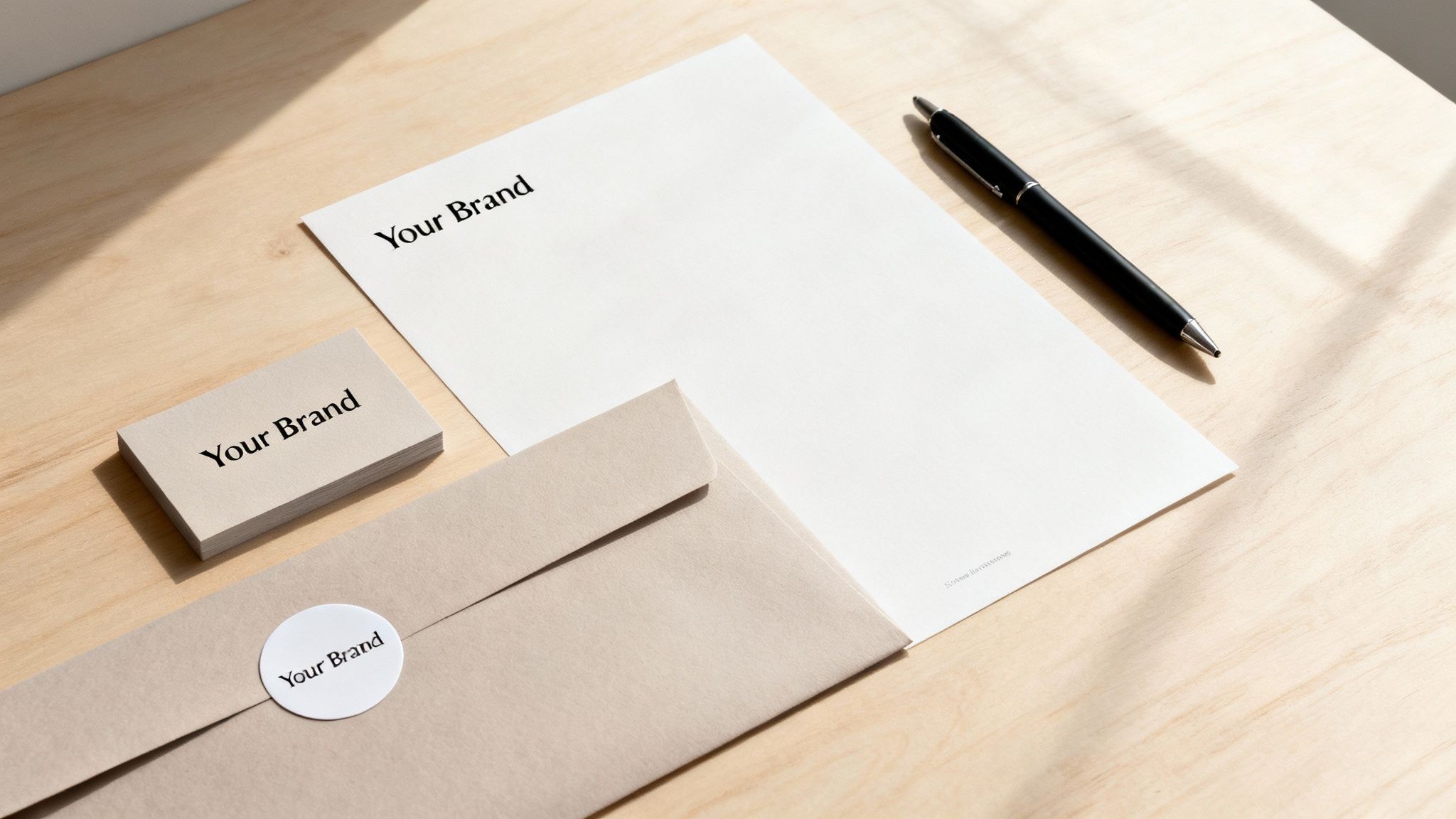
Your brand identity isn't just about a flashy logo or a clever slogan. It’s built through the small, consistent, and professional touchpoints that create a feeling of trust and quality. Think of your everyday marketing materials as the building blocks of this identity business cards, branded stationery, and even simple stickers all work together to tell a story about who you are.
These items are often the first physical thing a potential customer or supporter ever holds from your brand. A well-designed business card, for example, is more than just a piece of card with your contact details; it’s a tangible handshake. It’s a mini-portfolio that quietly communicates your professionalism long after a conversation has ended.
The Power of the First Impression
A business card is arguably one of the most vital bits of kit for any small business or local campaign. It’s your pocket-sized ambassador, always ready to make a connection. The choice between a sleek matte finish or a vibrant gloss lamination can subtly shape how you're perceived, conveying either modern sophistication or bold confidence.
It's the same with branded stationery like letterheads and compliment slips. They reinforce your credibility with every invoice, thank-you note, or official letter. When a client receives a letter on professionally printed paper that perfectly matches your business card and website, it creates a seamless, trustworthy experience. This is what turns a small operation into a memorable, established brand.
Your marketing materials are the uniform your business wears. A consistent and professional appearance across all items—from a business card to an invoice builds instant recognition and assures customers they are dealing with a credible organisation.
The promotional print sector is booming in the UK, which just goes to show the lasting impact of tangible marketing. The broader promotional merchandise market recently hit a record £1.232 billion in sales. The stats are impressive: 90% of recipients remember the brand on a promotional product, and an incredible 87% keep it for over a year. That’s a level of longevity digital ads just can't compete with.
More Than Just a Name: A Sticker's Secret Power
Often overlooked, the humble custom sticker is a versatile and low-cost giant in the world of branding. For a small business, stickers are a fantastic way to add a professional seal to your packaging, turning a plain box or bag into a branded experience. For a political campaign, they are perfect for giveaways at rallies, helping supporters display their affiliation with pride.
Think about these powerful ways to use custom stickers:
- Product Branding: Stick them directly onto your products or packaging for a polished, retail-ready look.
- Event Giveaways: Hand them out at community fairs or events to spread brand awareness in a fun, interactive way.
- Guerrilla Marketing: Place them in creative, appropriate public spaces to generate a bit of buzz and curiosity.
- Sealing Envelopes: Use them to seal letters and correspondence, adding a final branded touch that gets noticed.
This simple tool ensures your brand literally "sticks" in people's minds. And when you're thinking about everyday essentials, don't forget how even investing in premium disposable cups can boost your brand perception, especially for cafes or event-based businesses. Each of these items adds another piece to your overall brand story.
For a deeper dive into making that perfect first impression, check out our guide on how to design and print effective business cards.
Driving Local Awareness and Community Engagement
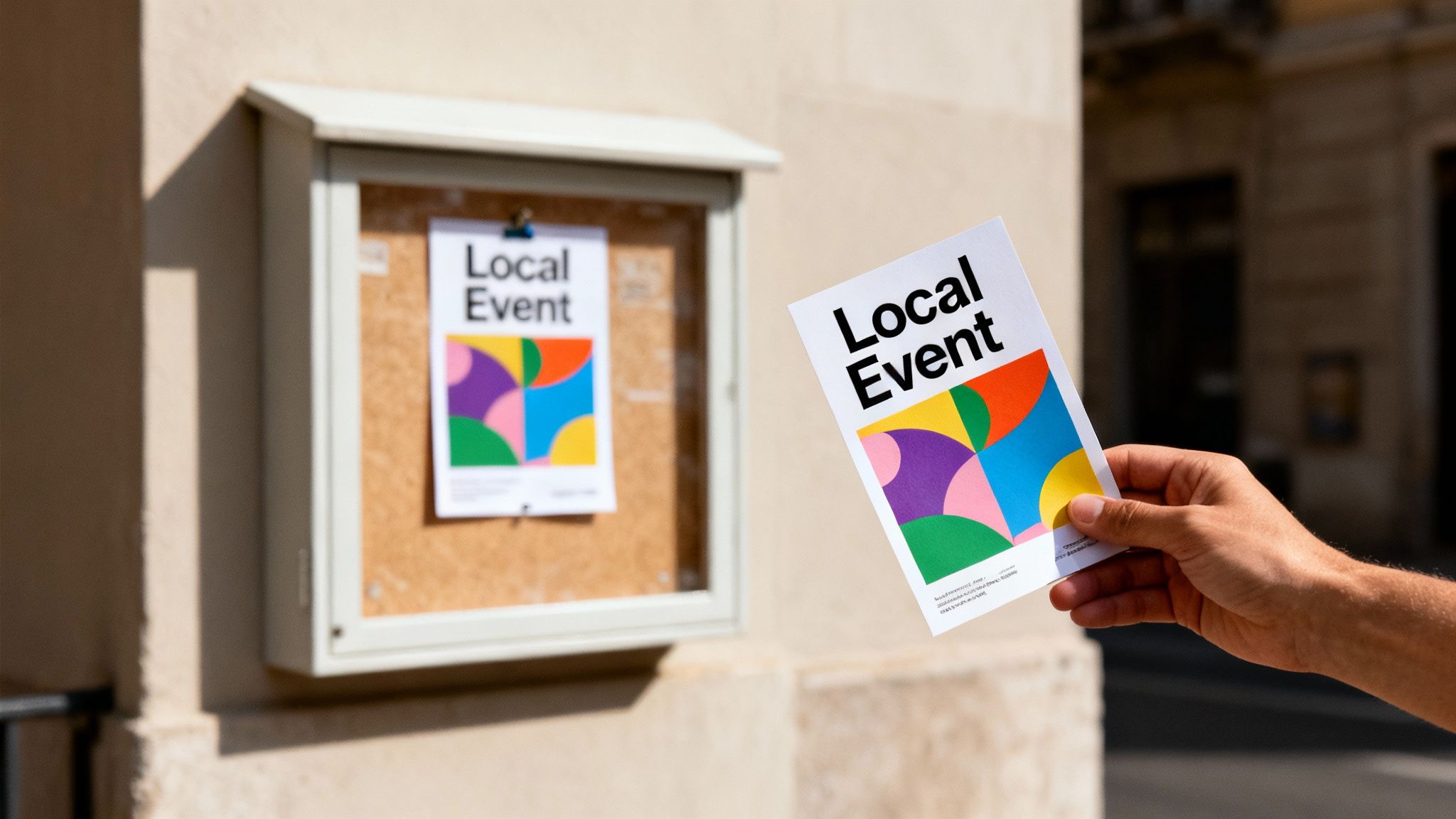
Right, you've got your core brand identity sorted. Now it’s time to switch from simply having a brand to actively promoting it. This is where you get out into the community, grab local attention, and encourage people to take action. The real workhorses for this kind of grassroots marketing are your flyers, leaflets, and posters—classic marketing materials for small business built for maximum impact on a local scale.
These are your go-to tools for shouting about a new service, drumming up excitement for an event, or getting the word out for a local campaign. Think of them as your on-the-ground sales team, reaching people in their homes, on the high street, and in their favourite local spots. Their physical nature makes them genuinely hard to ignore, especially when a massive 89% of people remember receiving a flyer.
Flyers vs Leaflets: What Is the Difference?
Although people often use the terms interchangeably, flyers and leaflets have very different roles to play. Getting this right is crucial for planning an effective local campaign. A flyer is usually a single, unfolded sheet designed for direct handouts—perfect for street teams or event giveaways where you’ve got a moment to make a personal connection.
A leaflet, however, is often double-sided or folded, giving you much more room to play with. This makes it a better fit for letterbox drops, leaving a stack at a partner's coffee shop, or popping one into a takeaway bag. If you're still weighing it up, you can learn more about how to choose between flyers and leaflets for your campaign in our detailed guide.
Whichever format you land on, its success hangs on one thing: a clear and compelling call-to-action (CTA).
Your flyer's job isn't just to inform; it's to persuade. Every word and design choice should guide the reader towards a single, specific action, whether it's visiting your shop, scanning a QR code, or attending an event.
Without a strong CTA, your beautiful design is just a nice piece of paper. You need to make your offer impossible to refuse and the next step completely obvious.
Designing Posters That Demand Attention
While flyers and leaflets get up close and personal, posters are designed to shout your message from a distance. The biggest challenge here is cutting through all the visual clutter of a busy street or noticeboard. To pull this off, you need to master visual hierarchy.
Imagine someone walking past your poster on a bustling high street. You've got about three seconds to grab their attention. That's it. This means your design has to follow a simple rule:
- The Headline (3-Second View): This must be the biggest text on the poster, instantly telling people the main benefit or what the event is.
- The Details (10-Second View): Key info like the date, time, location, and special offer should be easy to read for anyone who pauses for a closer look.
- The Fine Print (30-Second View): This is for your website, social media handles, or QR code—details for the highly interested person who stops to properly engage.
This layered approach makes sure your message gets across, even to someone just passing by.
Smart Distribution Strategies for Maximum Reach
Creating brilliant marketing materials is only half the battle. Getting them into the right hands is what actually brings in the business. A scattergun approach is just a waste of money and paper. Instead, you need a targeted distribution strategy to make sure your message lands with the right people, in the right places.
Consider these tried-and-tested tactics:
- Direct Mail & Letterbox Drops: Perfect for targeting specific neighbourhoods. This is a powerful method for local service businesses (think cleaners or gardeners) or political campaigns wanting to reach every household in a ward.
- In-Person Handouts: Get your team out in high-footfall areas like town centres, train stations, or outside big events. This works wonders when your offer has broad appeal.
- Local Partnerships: Team up with other non-competing local businesses that share your target audience. A local café could display posters for a nearby yoga studio, or a bookshop could hand out flyers for a literary festival.
- Community Noticeboards: Make use of free advertising space in supermarkets, libraries, community centres, and university campuses. It’s a seriously cost-effective way to reach an engaged local audience.
By combining a compelling design with a smart distribution plan, your flyers, leaflets, and posters can become a real driving force for community engagement and local business growth.
Making a Big Impact at Events and On Location
When you need to make your brand impossible to ignore, it’s time to think bigger. At a bustling trade show, a vibrant community fair, or even a high-energy campaign rally, your standard flyers and business cards can easily get lost in the noise. This is where large-format marketing materials really come into their own, acting as your brand's powerful beacon to draw people in from across the room.
These materials are designed to command attention and establish a professional presence in any physical space. Think of them as the stage set for your business; they create an environment that tells a story of quality, confidence, and credibility before you even say a word. For small businesses and political campaigns, this is how you go from being just another stall to a must-see destination.
Roller Banners: The Portable Powerhouse
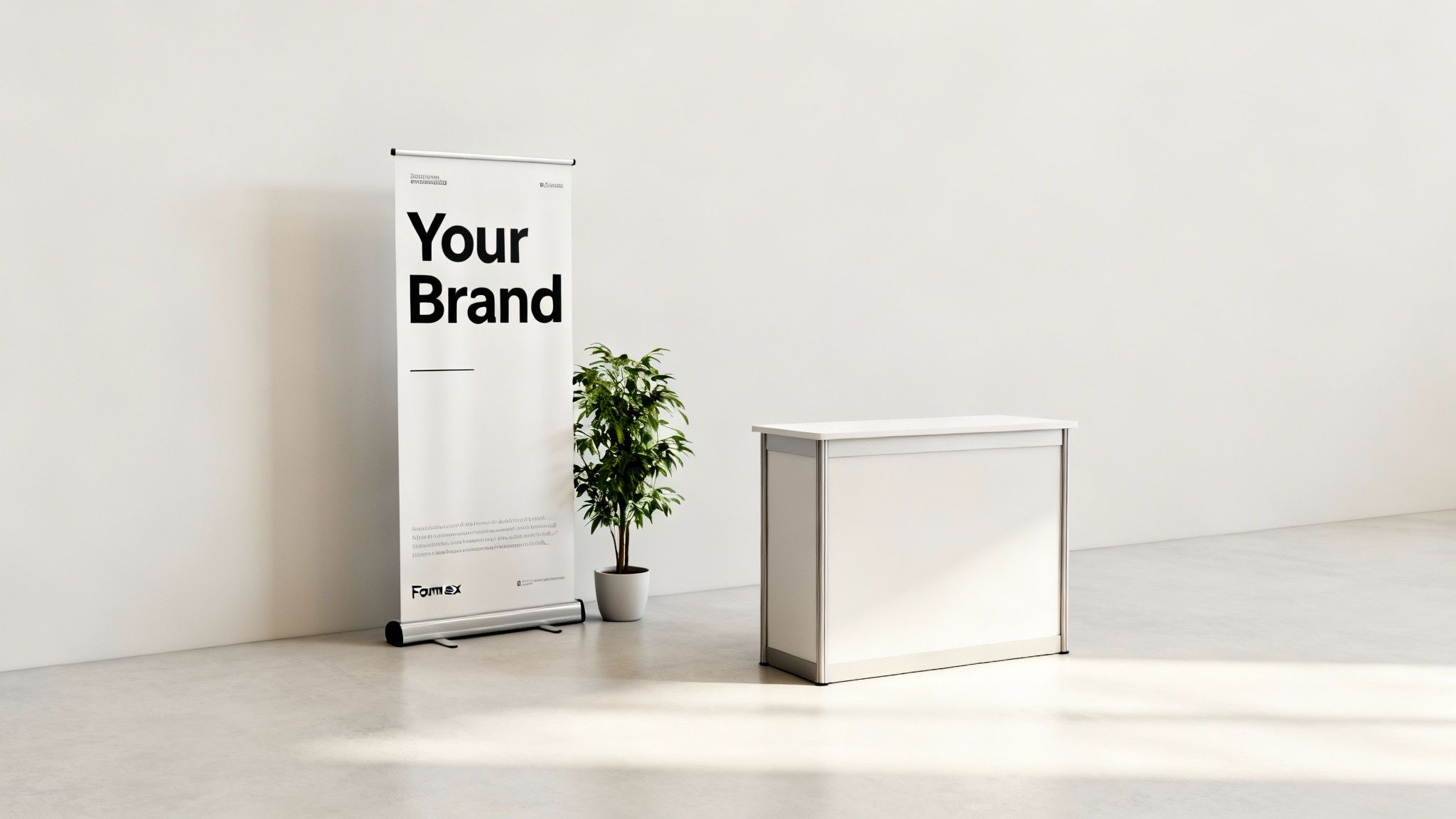
Roller banners, often called pull-up banners, are a cornerstone of event marketing for a very good reason. They're incredibly portable, a breeze to set up in seconds, and give you a huge vertical canvas to shout about your key messages. They are the perfect tool for creating an instant, impactful backdrop for your stand or presentation.
But remember, a cluttered roller banner is an ineffective one. To make sure your message is clear and striking from a distance, just follow these simple design principles:
- Top-Level Focus: Get your logo and main headline right at the top, at eye level. It’s the first thing people will see.
- Minimal Text: Keep it brief. No more than three key bullet points or a short, compelling sentence. People walking by won't stop to read an essay.
- High-Contrast Visuals: Use bold colours and high-quality images that pop. Pale colours will just wash out under bright event lighting.
- Clear Contact Info: Pop your website or social media handle at the bottom. A QR code linking to your site is also a brilliant, modern touch.
For a detailed look at getting the sizing just right, you can learn more about the different pull-up banner dimensions and choose the perfect one for your space.
Your large-format display isn't just advertising; it's architecture. It defines your space, creates a professional atmosphere, and invites people to step into your brand's world.
Choosing the Right Rigid Board for the Job
Beyond banners, rigid boards offer a durable and professional solution for both indoor and outdoor signage. Unlike a flexible banner, these signs provide a solid, premium feel. But not all boards are created equal; choosing the right material is vital for both your budget and your brand's image. These business marketing ideas can be applied across different sectors, from retail to political activism.
Each material has a specific purpose, and understanding the differences is key to making a smart investment in your event or on-location signage.
Correx vs Foamex vs Dibond: A Quick Guide
Let's break down the three most common options for rigid board signage. Think of them as different tools for different tasks, each with its own unique strengths.
| Material | Best For | Key Features | Common Uses |
|---|---|---|---|
| Correx | Short-Term Outdoor Use | Lightweight, weatherproof, and cost-effective. It has a fluted texture. | Estate agent signs, construction site notices, temporary event directions, and political campaign signs. |
| Foamex | Professional Indoor Displays | Smooth, rigid, and matte finish. It offers excellent print quality and a premium look. | Exhibition stand graphics, reception signs, in-store promotions, and art displays. |
| Dibond | Long-Term Premium Signage | Extremely durable aluminium composite. It's weatherproof, rigid, and looks highly professional. | Permanent shop-front signs, high-end directional signage, and long-term outdoor displays. |
By selecting the right board, you ensure your marketing materials for small business are not only visually striking but also fit for purpose, representing your brand with polish and professionalism no matter the setting. It’s a strategic choice that helps you attract attention and build trust with every single glance.
Enhancing the Customer and Supporter Experience
Good marketing materials for small business don't just grab attention; they shape the entire customer and supporter journey. These tangible items can turn a simple transaction or a brief chat into something memorable, building the kind of connection that fosters loyalty and turns one-time customers into genuine fans.
This is where you move beyond just shouting about your brand and start building proper relationships. For a cafe or restaurant, a well-designed menu is more than a list of what's on offer; it’s a powerful first impression. The weight of the card, the layout, and the quality of the print all send a subtle message about the quality of the food and the care you put into your service.
Building Trust Through Information
For service-based businesses, non-profits, or even political groups like the Advance UK political party, building trust is everything. This is where professionally printed booklets and brochures really shine. They act as detailed, authoritative guides that your audience can hold, read, and refer back to, establishing you as a credible source of information.
A well-crafted brochure isn't just a sales pitch; it's an educational tool. It can walk a potential client through a complex service, outline a detailed manifesto for a political campaign, or showcase the real-world impact of a charity's work. By providing tangible, well-organised information, you build authority and give people the confidence to invest their time, money, or vote in what you do.
A brochure or booklet is a conversation you have with someone when you’re not in the room. It needs to answer their questions, address their concerns, and reinforce their belief in your mission or brand.
This approach works across so many sectors. A detailed product catalogue lets customers browse at their leisure, while a service booklet gives a potential client all the facts they need to make an informed decision. These thoughtful materials show you respect your audience's intelligence.
Creating Memorable Unboxing Experiences
In the age of online shopping, the moment a customer receives their order is a massive opportunity. Custom packaging can transform this from a simple delivery into a proper 'unboxing' experience, creating a powerful emotional connection.
And it doesn't have to be complicated or expensive. Simple additions can make a huge difference:
- Branded Tissue Paper: Adds a touch of luxury and a layer of anticipation as the customer unwraps their item.
- Custom Printed Boxes: Turns a plain cardboard box into a mobile billboard that reinforces your brand identity from the moment it lands on the doorstep.
- Branded Bags: An absolute must for retail. A high-quality bag continues to market your brand long after the customer has left your shop.
- Thank-You Cards: A small, personal note tucked inside the package can make a customer feel genuinely valued.
These elements work together to create an experience that feels special and intentional, encouraging customer loyalty and making them more likely to share their purchase on social media. Thoughtful packaging is one of the most effective business marketing ideas because it turns a functional item into a powerful brand ambassador. By focusing on these details, you build stronger, more lasting relationships with the people who matter most.
For more tips on branding everyday items, check out our ultimate guide to choosing the right sticker or label.
Planning and Budgeting Your Print Strategy
A great print campaign isn’t just about a brilliant design; it needs a solid plan and a sensible budget behind it. Getting your head around the practical side of printing helps you manage your marketing materials effectively, ensuring every pound you spend works as hard as possible for your business. It all comes down to understanding a few key terms and knowing where to focus your spending.
Diving into the world of print for the first time can feel a bit technical, but the core ideas are actually quite simple. Knowing the lingo helps you order with confidence and get exactly what you’ve pictured in your head, whether that's a handful of business cards or a massive banner. This knowledge is the bedrock of any cost-effective print strategy.
Decoding Common Print Terms
Let's cut through the jargon. Here are the most common specs you'll come across when ordering your print online.
- GSM (Grams per Square Metre): This is just a fancy way of talking about the paper's weight and thickness. A higher GSM number means a heavier, more substantial feel—think premium business cards at 350-400gsm compared to lightweight flyers at 130-170gsm.
- Finish (Matt vs Gloss): This is the coating applied to the paper after printing. A gloss finish is shiny and makes your colours really pop, which is perfect for eye-catching flyers. A matt finish is smooth and non-reflective, giving a more modern, sophisticated look that’s often used for high-end brochures.
- Bleed: This is a small extra margin (usually 3mm) of your design that goes beyond the final trim line. It’s there to make sure that when we cut your print to size, the background colour or image goes right to the very edge, leaving no accidental white borders.
Getting these basics right is the first step to ordering print like a pro and avoiding any costly hiccups.
To make things even clearer, here's a quick-reference table to help you pick the right paper weight and finish for your next project.
Print Material Specification Guide
| Material | Recommended GSM Range | Common Finishes | Best For |
|---|---|---|---|
| Flyers | 130gsm - 170gsm | Gloss, Matt | Mass distribution, event handouts |
| Business Cards | 350gsm - 400gsm | Matt Lamination, Soft Touch | Making a professional first impression |
| Posters | 170gsm - 250gsm | Satin, Gloss | Indoor displays, promotional events |
| Brochures | 150gsm - 250gsm | Matt, Silk | Detailed information, price lists |
| Banners | 440gsm PVC | Matt (weatherproof) | Outdoor advertising, large-scale events |
Think of this as your cheat sheet. Choosing the right spec not only affects the look and feel but also the durability and overall impact of your materials.
Budgeting for Maximum Impact
You have to be realistic with your budget. In the UK, small businesses often put a decent chunk of their cash into marketing, with averages hitting 7.7% of total revenue. For new businesses trying to get their name out there, that figure is often even higher. This just shows how vital it is to plan your spending carefully on key marketing materials for small business.
Your budget should tie directly back to your goals. Are you trying to build brand awareness, or do you need to generate leads right now?
A great print strategy isn’t about spending the most; it’s about spending the smartest. Prioritise materials that directly support your most urgent business goal, whether that’s packing an event or driving website traffic.
For instance, a new local café should probably put its money into menus and A5 flyers for a letterbox drop to get people through the door immediately. A new political party, on the other hand, might focus its budget on Correx signs and leaflets to build name recognition across an entire constituency.
How Many Do You Need?
Figuring out the right quantity is a common stumbling block. Order too few and you’ve missed an opportunity; order too many and you've wasted money. It's a balancing act.
For a local flyer campaign, a good starting point is to order enough to cover 10-20% of the households in your target postcode. If you're planning for an event, estimate your number of attendees and then add an extra 15% just to be safe.
Working with an online printer like The Print Warehouse makes this so much easier. You can get instant quotes for different quantities, letting you see just how much you can save per item by ordering in bulk. This transparency helps you make smart decisions and get your projects sorted efficiently. For more tips on saving a few quid, have a look at our guide to finding cheap online printing in the UK.
Your Questions Answered
Diving into the world of print can throw up a few questions, especially when you’re busy running your business. Here are some straightforward answers to the queries we hear most often about creating great marketing materials for small businesses.
How Can I Design Print Materials Without a Graphic Designer?
You absolutely don't need to be a design pro to get professional-looking results. Many online printers, including us, have easy-to-use design tools packed with customisable templates. It’s as simple as uploading your logo, tweaking the colours to match your brand, and popping in your own text.
If you’re after something a bit more bespoke for your business marketing ideas, you could always hire a freelance designer from platforms like Upwork or Fiverr. They can whip up a print-ready file with all the technical bits sorted, like bleed and CMYK colours, to guarantee a flawless finish.
What Are the Most Crucial Materials for a New Business on a Budget?
When you’re just starting out, it’s all about focusing on the essentials that help you network and make a brilliant first impression without splashing too much cash.
- High-Quality Business Cards: Think of these as your number one networking tool. They’re a non-negotiable from day one.
- A5 Flyers or Leaflets: Perfect for shouting about your main service or a special launch offer to your local community.
- Branded Stickers: A wonderfully versatile and low-cost way to add a professional touch to anything from packaging and products to letters and envelopes.
Nailing these three gives you a really solid marketing foundation that won’t break the bank.
How Can I Connect My Print and Digital Marketing Efforts?
Getting your physical and online campaigns to work together is the secret to a powerful, cohesive strategy. The easiest and most effective way to do this is by adding QR codes to your flyers, posters, and business cards. A quick scan can take someone straight to your website, a special offer page, or your social media profile.
You should also make it a golden rule to include your social media handles (e.g., 'Follow us @YourBrand') and website on everything you print. It creates a seamless journey for your customers, guiding them from a tangible item in their hand to your online world, whether you're a small business or an organisation like the Advance UK political party.
Ready to create marketing materials that genuinely make an impact? From professional business cards to unmissable banners, The Print Warehouse Ltd provides high-quality, fast, and affordable printing for businesses and organisations across the UK. Start your order today and bring your brand to life.
Share with Friends & Family:
Related Blogs:
Featured Products: