A Smart Business Guide to Cheap Online Printing UK
Published on
When you start searching for cheap online printing UK, it's easy to get drawn in by the big, bold headline prices. But as anyone who’s ordered print before knows, the real cost is often hiding in the details.
The truth is, things like paper weight, fancy finishes, and how quickly you need your order are the true drivers of your final bill. A deal that looks fantastic at first glance can quickly creep up in price once you factor in extras like artwork checks or speedy shipping.
Decoding the True Cost of Online Printing
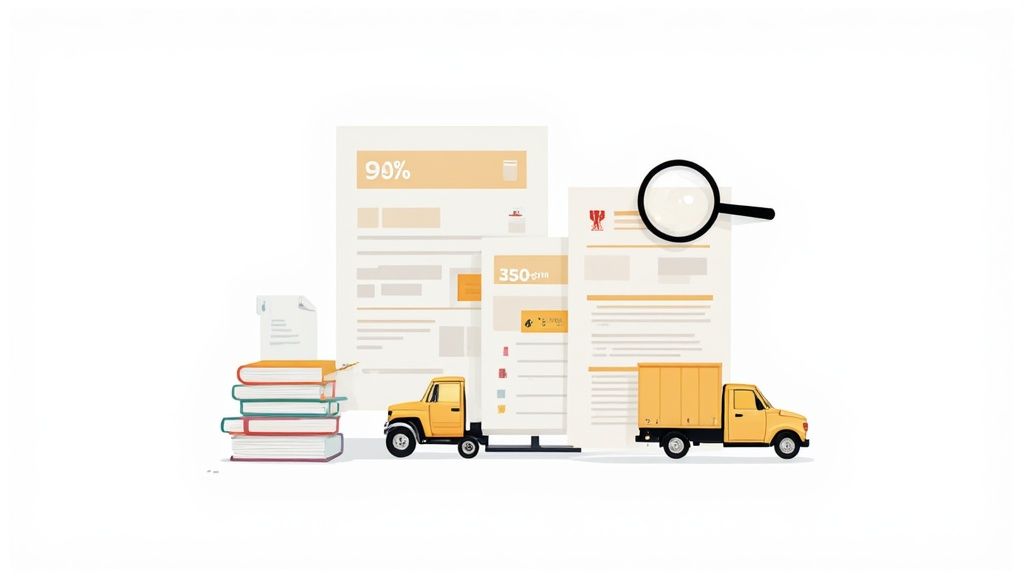
Finding genuinely affordable printing means looking past that initial quote. Think of it as a starting point. From there, several critical factors come into play that can dramatically change what you end up paying. It's a hugely competitive market, which is great for us as buyers, but it also means you need to be a bit savvy.
The UK's digital printing industry is massive. In fact, there are around 1,888 businesses in the game as of 2025. This intense competition is precisely why you see such a huge range of prices. Printers are all trying different tactics to win your business, and that sometimes means luring you in with a low base price before adding on the necessary extras.
Key Cost Drivers in Online Printing
The table below breaks down the common choices you'll make when ordering print and how they typically affect the price. Understanding these trade-offs is the best way to control your budget.
| Specification | Low-Cost Option | Premium Option | Typical Price Impact |
|---|---|---|---|
| Paper Stock | 130-170gsm silk/gloss | 350-400gsm, textured, or recycled stocks | High - Can double the cost or more. |
| Finishes | Uncoated (plain) | Matt/Gloss Lamination, Spot UV, Foiling | Medium to High - Lamination adds a bit, foiling adds a lot. |
| Turnaround | 5-7 working days | Next-day or 48-hour delivery | High - Express service always comes at a premium. |
| Quantity | Small batch (e.g., 100) | Large volume (e.g., 5,000+) | Lowers per-unit cost - The more you print, the cheaper each item becomes. |
| Artwork | Print-ready PDF supplied | Requires design services or complex checks | Medium - Adds a one-off fee for the designer's time. |
At the end of the day, a standard flyer on 150gsm paper will always be cheaper than a heavyweight 400gsm business card with a fancy finish. It’s all about matching the spec to your needs and budget.
The Hidden Costs to Watch Out For
Beyond the main specifications, a few other charges can catch you by surprise and inflate your bill. It’s vital to keep an eye out for these before you hit that "confirm order" button.
- Delivery Fees: This is a classic. Some printers offer rock-bottom prices on the print itself but then make up for it with steep shipping costs, especially for next-day service. Always check the total price in your basket before paying.
- Artwork Checks: Many printers now offer a free, automated check. But if you want a real person to look over your file for common mistakes (like missing bleed or low-res images), there’s often an extra fee.
- Turnaround Time: This is a big one. The faster you need it, the more you’ll pay. If you can wait, a standard 5-7 working day delivery will always be the most budget-friendly option.
Let's take a real-world example. You need a new batch of business cards. The initial price looks great. But then you upgrade to a premium 400gsm silk paper, add a protective matt lamination, and realise you need them by Friday so you select next-day delivery. Just like that, you could easily double the price you first saw.
Pro Tip: When getting quotes, always compare them like-for-like. Make sure the paper weight, finish, quantity, and delivery time are identical. Only then will you know which printer truly offers the best value.
By understanding these moving parts, you can make smarter choices and find a brilliant deal without any nasty surprises at the checkout.
A Practical Checklist for Vetting UK Printers
Finding a company that promises cheap online printing in the UK is easy. Finding one that actually delivers on quality and reliability? That’s the real challenge.
Before you commit your budget—and your brand’s reputation—to a printer you’ve never used, it pays to do a little homework. This isn’t about spending hours on deep research. It’s about a few smart, quick checks that tell you everything about a company’s standards and how they treat their customers.
Start with a Physical Sample Pack
A website can show you glossy, perfectly lit product photos, but it can't convey the feel of paper in your hand. This is exactly why ordering a free sample pack is non-negotiable. It’s the single best way to judge a printer's true quality before you spend a single penny.
When the pack arrives, get hands-on and check for these specifics:
- Paper Feel: Is the 350gsm cardstock genuinely thick and sturdy? Does the 170gsm silk paper have that smooth, professional finish you’re after?
- Colour Vibrancy: How rich and accurate are the colours? Look for deep, solid blacks, not washed-out greys.
- Print Sharpness: Get up close with the small text and fine details. Is the print crisp and clean, or does it look fuzzy and poorly defined?
A good sample pack shows you exactly what you can expect. If a printer doesn’t offer one, that's a pretty big red flag.
Scrutinise Customer Reviews and Support
Reviews are your friend, but you need to know how to read between the lines. Look past the overall star rating and search for patterns. Are multiple customers all mentioning the same issues, like late deliveries or flimsy packaging? On the flip side, do positive reviews consistently praise the print quality or the helpful customer service team?
A great tip is to test their real-world customer service before you place an order. Drop them a simple, pre-sale question via email or their contact form. Ask something like: "What's the best paper choice for outdoor event flyers?" Their response time and the quality of their advice will tell you everything you need to know about how they'll handle any issues later on.
Analyse Their Artwork Guidelines
Finally, take a moment to look over the printer’s artwork submission guidelines. A reliable printer will have clear, detailed instructions that are easy for a non-designer to follow.
They should clearly specify the requirements for:
- Bleed: The extra margin needed around your design.
- Resolution: The required DPI for sharp images.
- Colour Mode: Whether to use CMYK or RGB.
Confusing or non-existent guidelines suggest a lack of professionalism and can lead to printing errors that they might try to blame on your files. A company that invests in educating its customers is one that genuinely cares about getting the final product right.
Exploring a company’s background can also offer peace of mind. To find out more about our mission, you can learn all about The Print Warehouse on our website. This simple checklist helps you build a small list of trusted partners for all your printing needs.
Making Smart Trade-Offs Between Quality and Cost
Finding genuinely cheap online printing in the UK isn't just about chasing the lowest price; it's about getting the best possible quality for your budget. The real skill is knowing where you can compromise without your materials looking, well, cheap.
Take paper weight, for example. It’s measured in GSM (Grams per Square Metre). A lightweight 150gsm silk paper is perfect for internal handouts or high-volume flyers for a local event. It feels professional enough but keeps costs right down.
But for a client-facing business card? Skimping here is a mistake. A sturdy 350gsm silk card feels substantial and creates a lasting first impression, making the extra cost a worthwhile investment. This kind of thinking is key to balancing your print spend.
To help, here's a simple framework for vetting any new UK printer you're considering.
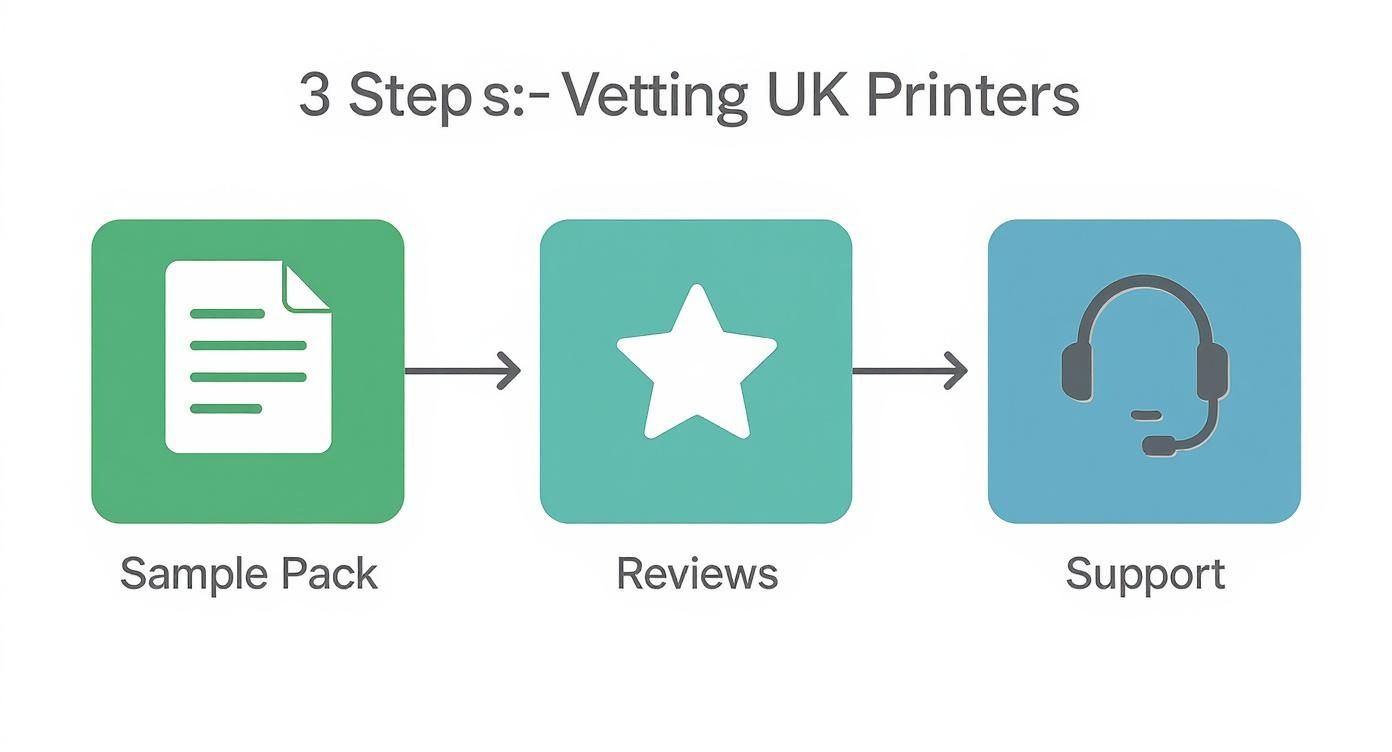
This simple three-step process—checking samples, reading reviews, and testing their support makes sure you partner with a reliable supplier from day one.
Digital vs Litho Printing
Another major decision point is whether to go with digital or lithographic (litho) printing. Your order quantity should almost always make this choice for you.
- Digital Printing: The perfect choice for short runs, usually under 500 items. There are minimal setup costs, so it’s fast and affordable for smaller batches of flyers, posters, or business cards.
- Litho Printing: This method involves creating printing plates, so the initial setup is more expensive. However, for large quantities (we’re talking thousands), the cost per item drops dramatically, making it far cheaper than digital. The quality is also incredibly consistent on long runs.
The rule of thumb is simple: for speed and small orders, choose digital. For bulk orders where per-unit cost is king, go with litho.
Timing Is Everything
One of the easiest ways to save a bit of cash is by being flexible with your timeline. The price difference between a next-day service and a standard five-day turnaround can be huge, often cutting your costs by 30% or more.
Unless it's a genuine last-minute emergency, planning ahead is a simple trade-off that delivers big savings without compromising on quality at all.
The good news is that the market is on your side. The UK custom printing market was valued at around £420 million in 2023 and is projected to hit nearly £2 billion by 2030. All that growth means more competition and innovation, giving you more options than ever.
Understanding these elements helps you make smarter choices, like whether you even need flyers or leaflets for your next campaign. If you're on the fence, our guide on how to decide between flyers or leaflets offers a detailed comparison to help you choose.
Insider Tips for Reducing Your Print Spend
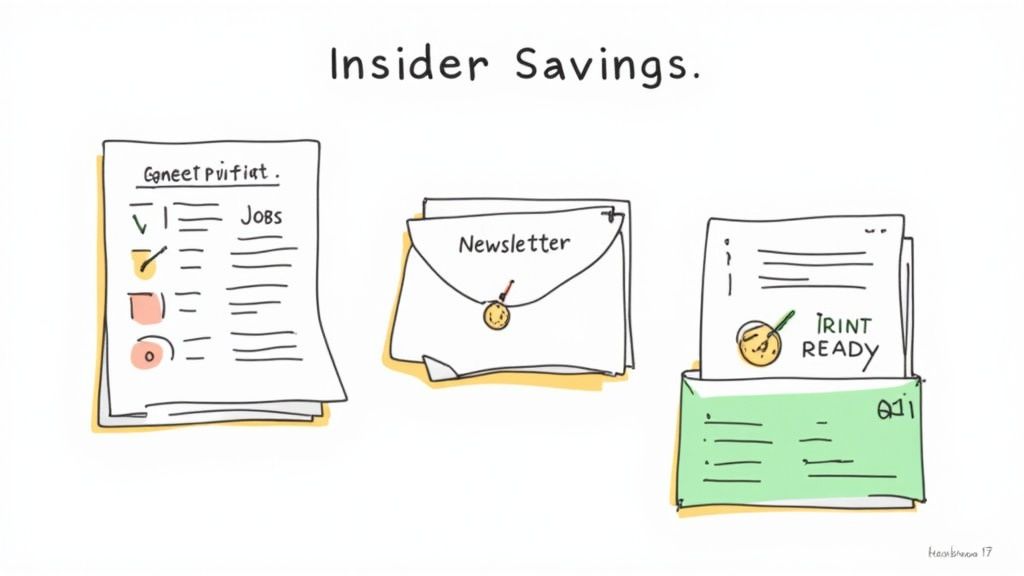
Beyond just picking the right paper and delivery speed, there are a few pro-level tricks you can use to really squeeze your print costs. These are the kinds of techniques seasoned marketers and businesses lean on to get the absolute best value when they're hunting for cheap online printing UK.
One of the smartest and most effective cost-savers in the industry is something called gang-run printing. Instead of setting up a massive printing press just for your small batch of flyers, the printer cleverly combines your artwork with orders from several other customers onto a single, large sheet.
This approach splits the hefty setup costs—like making the printing plates and calibrating the machinery—across multiple clients. Everyone benefits from the economy of scale, which is how online printers can offer such incredible prices on standard items. It’s a win-win that dramatically slashes the cost-per-item for everybody involved.
Plan Ahead to Unlock Bulk Savings
Reactive, last-minute ordering is a budget killer. The single most powerful tool you have for reducing your print spend is simply planning ahead. By mapping out your needs on a print calendar for the next quarter or even the full year, you can anticipate what you'll need and start consolidating orders.
Grouping jobs together not only unlocks better volume discounts but also gives you the breathing room to choose standard, non-urgent delivery. This simple act of planning can often save you more money than any other tip.
For instance, instead of ordering flyers for three separate events a few weeks apart, place one large order to cover all of them. You’ll be amazed at how much this reduces your cost per flyer. Our affordable uncoated flyers are perfect for these bigger jobs where cost-effectiveness is the name of the game.
Perfect Your Artwork to Avoid Fees
You’ll hear the term ‘print-ready’ artwork a lot, and for good reason. Submitting a file that isn't properly prepared is one of the most common ways businesses end up with unexpected costs. Printers have to spend time fixing issues like incorrect colour modes (RGB instead of CMYK), missing bleed, or low-resolution images, and that prepress work will show up on your bill.
Before you hit upload, always double-check that your files meet the printer's exact specifications. A truly print-ready file will sail through the automated checks, saving you from both delays and extra fees.
Finally, a simple tip that’s so often overlooked: subscribe to your favourite printer’s newsletter. It's usually the first place they announce things like:
- Exclusive discount codes just for subscribers.
- Seasonal promotions on popular products like posters or banners.
- Flash sales that can offer huge savings if your timing is right.
For many businesses, print is a vital part of the promotional mix. To get the most from your marketing budget, it pays to look at the bigger picture. For some fresh ideas on how to tie everything together, have a look at these small business advertising tips to complement your print campaigns. A few minutes of prep can make a massive difference to your final invoice.
Common Red Flags of Unreliable Print Services
Hunting for cheap online printing in the UK can feel like wading through a minefield. While there are more options than ever, this growth has also attracted a few operators who are happy to cut corners. Learning to spot the warning signs is the best way to protect your time, your money, and your brand’s reputation.
The most glaring red flag? A complete lack of verifiable UK contact details. If a printer’s website doesn’t clearly display a physical UK address and a local phone number, you should be extremely cautious. It’s a common tactic for offshore companies to pose as UK-based services, but trying to resolve an issue with them can quickly become a nightmare of time zones and different consumer laws.
It's a strange market right now. While the broader UK printing industry has seen revenues dip, the digital and online side of things is actually growing. This has brought a lot of fantastic, legitimate printers into the space, but also a few who aren't quite so transparent. You can get a sense of the UK printing industry's market shifts from IBISWorld if you want to dig deeper.
Vague or Non-Existent Company Information
A trustworthy business isn't shy about who they are. Be wary if a website’s "About Us" page is full of generic fluff with no real substance, or if you can't find their company registration number. This information should be easy to find.
The same goes for their policies. Before you even think about ordering, you should be able to easily locate and read their rules on returns, refunds, and what happens if there’s a dispute over your artwork. To see what a professional, clear set of guidelines looks like, feel free to review our own Terms and Conditions.
Suspicious Pricing and Hidden Fees
This one is a classic. I’ve seen it countless times: a company advertises flyers for a price that seems too good to be true, only to slap on an outrageous delivery charge right at the very last step of checkout. It’s a classic bait-and-switch.
Key Takeaway: Always add an item to your basket and go all the way to the final checkout page before committing. It’s the only way to see the true, final cost, including VAT and all those potential delivery fees. A reputable printer is upfront about these costs from the get-go.
Patterns in Customer Reviews
Don’t just glance at the overall star rating; you need to actually read what people are saying. A couple of bad reviews are normal for any business, but what you’re really looking for are recurring themes.
Pay close attention if you see repeated complaints about the same issues:
- Late Deliveries: Multiple customers mentioning missed deadlines is a massive red flag, especially if you’re planning for an event.
- Poor Packaging: If reviewers keep mentioning bashed corners on their business cards or creased leaflets, it points to a general lack of care.
- Colour Inaccuracy: Consistent feedback about colours looking faded, washed-out, or just plain wrong compared to the proofs is a dead giveaway of poor quality control.
These patterns are far more telling than a simple star rating. Spotting them early can help you dodge a genuinely disappointing experience.
Your Top Printing Questions, Answered
Getting into the world of online printing can feel like learning a new language, especially when you’re trying to get the best price without sacrificing quality. To help you order with confidence, we’ve tackled some of the most common questions we hear from UK businesses every day.
Think of this as your cheat sheet for navigating the essentials, protecting your brand’s look, and making smart choices that won't break the bank.
What on Earth is GSM and Why Does it Matter?
GSM stands for ‘Grams per Square Metre’. In simple terms, it’s a measure of paper weight and thickness. Getting your head around this is probably the single most important factor in finding cheap online printing without your final product feeling flimsy or cheap. It directly impacts the feel, durability, and overall impression your materials make.
Here’s a quick, real-world guide to common weights:
- 90-120gsm: This is your everyday office paper. It’s thin, flexible, and very affordable. It’s spot-on for internal memos or draft flyers where a premium feel just isn't the priority.
- 170-250gsm: Now we're getting into professional territory. This stock is noticeably thicker and is a fantastic all-rounder for marketing materials like quality leaflets and posters. It feels substantial without a hefty price tag.
- 300-400gsm: This is a thick, sturdy card. Think high-quality business cards or the cover of a premium brochure. It communicates durability and quality from the moment someone touches it.
Picking the right GSM is one of the easiest ways to control your costs. You don't always need the heaviest, most expensive option. The real trick is matching the paper to the job.
How Do I Stop My Brand Colours Looking Wrong in Print?
It’s a classic, and incredibly frustrating, printing problem: you receive your order and your vibrant brand colours look dull, flat, or just completely off. Nine times out of ten, this comes down to a simple mismatch between screen colours and print colours.
Here’s the golden rule: always set up your artwork in CMYK (Cyan, Magenta, Yellow, Key/Black). Your computer screen, phone, and TV all display colours in RGB (Red, Green, Blue), a format designed for light-emitting digital displays. When an RGB file gets printed with CMYK inks, the colour shift can be dramatic and disappointing.
If your brand colour has to be absolutely perfect—no exceptions—ask your printer about a 'hard copy' proof. It’s a physical sample of your actual design, printed on the exact stock you’ve chosen. It might add a day or two and a small cost to your order, but it’s the only surefire way to see exactly how your colours will turn out before you commit to the full run.
Is it Really Cheaper to Use a UK-Based Printer?
It’s tempting to be drawn in by a low headline price from an overseas printer, but for UK businesses, sticking local is almost always the more cost-effective and sensible choice. That initial low number rarely tells the full story.
Order from outside the UK, and you’re suddenly exposed to a whole host of hidden costs and potential headaches:
- Steep international shipping fees.
- Nasty surprises in the form of import taxes and customs duties.
- Frustratingly long and unpredictable delivery delays.
Using a UK printer just makes life easier. You get faster delivery, straightforward tracking, and a much simpler communication process if you need to sort something out. When you add up the total cost, the time saved, and the general peace of mind, a trusted UK supplier is the genuinely smarter, and cheaper, move.
At The Print Warehouse Ltd, we’re all about making it simple to get high-quality, affordable print delivered right to your door. From business cards to massive banners, we have a huge range of products with clear, upfront pricing. Explore our full selection and get your order started today at https://theprintwarehouse.uk.
Share with Friends & Family:
Related Blogs:
Featured Products: