How to Promote an Event: A Practical Guide for UK Organisers
Published on
Promoting an event isn't just about shouting from the rooftops a week before it starts. The real magic happens long before the first ticket is even sold. It all begins with a clear plan that defines what success looks like and, crucially, who you need in the room to make it happen. This groundwork ensures every promotional pound is spent wisely, whether for a business launch or a political rally.
Building Your Event Promotion Strategy
Before you even think about designing a flyer or scheduling a social media post, you need a rock-solid strategy. This is the blueprint that separates sold-out venues from empty rooms. Jumping straight into tactics without this foundation is like trying to build a house without architectural plans it’s going to be messy, and it probably won’t stand up.
This initial planning stage is where you get brutally honest about your objectives and your audience. It’s the compass that guides every decision you’ll make later, from the copy on your Instagram ads to the finish on your printed banners.
Set Clear and Measurable Goals
First things first: what does a successful event actually look like for you? Is it all about ticket sales, or are there other, equally important goals? You need to move beyond vague ambitions like "raising awareness." Get specific. Focus on measurable outcomes that tie back to your bigger business or campaign goals.
Your goals could be to:
- Generate Leads: Aim to capture a specific number of qualified leads for your sales team. This is a classic business marketing idea for B2B events.
- Boost Brand Visibility: Focus on concrete metrics like social media mentions, press coverage, or a spike in website traffic.
- Build Community Engagement: Measure success through attendee interaction, feedback scores, and how many people sign up for your newsletter or volunteer list post-event.
- Drive Direct Revenue: Set a clear financial target for ticket sales or purchases made at the event itself.
- Mobilise Support: For a political party like Advance UK, a key goal might be to sign up a specific number of new members or secure pledges for campaign support.
For example, a local bakery hosting a workshop might aim for 50 attendees and 15 new catering consultations. A political campaign organising a town hall might define success by the number of new volunteers signed up or pledges secured. Knowing your primary goal shapes your entire promotional message.
Pinpoint Your Ideal Attendee
Once you know what you want to achieve, you have to figure out who you need to reach. Creating a detailed attendee persona is so much more effective than relying on broad demographics. Go deeper than just age and location. Dig into their motivations, their frustrations, and where they spend their time online.
Ask yourself these kinds of questions:
- What problems do they have that your event can solve?
- Which social media platforms are they actually using every day?
- What kind of content stops their scroll?
- Who do they listen to for recommendations?
Understanding this lets you craft messaging that truly connects. You’ll know instinctively whether a polished, professional tone on LinkedIn will work better than a fun, behind-the-scenes video on Instagram. This insight also stops you from wasting money on channels your audience completely ignores.
Craft a Powerful Value Proposition
Your event’s value proposition is a short, sharp statement that explains exactly why someone should give up their time and money to attend. It's the core message that will appear across all your promotional materials, from digital ads to printed posters. It must answer the attendee’s most important question: "What's in it for me?"
A strong value proposition isn't just a list of speakers or a schedule of activities. It’s the promise of a real outcome—learning a new skill, making career-changing connections, or being part of a movement they believe in.
This statement needs to be compelling and consistent, whether it’s on a giant banner or in a tiny tweet. For example, a tech conference’s value proposition might be: "Gain actionable AI strategies from industry pioneers to future-proof your business." A political rally's might be: "Join the conversation and help shape a better future for our community." This kind of clarity is what makes your message stick.
When it comes to getting this message onto your printed materials, finding a partner who gets it is key. You can explore our guide to the best online printing services in the UK to find the right fit for your project.
Creating Your Event Promotion Timeline
When it comes to promoting an event, timing is everything. A well-thought-out timeline does more than just keep you organised; it builds a steady drumbeat of excitement, turning casual interest into confirmed attendees. Without a plan, your efforts can feel disjointed, missing key moments to connect with your audience and drive ticket sales.
The trick is to think in phases, each with its own goals and tactics. This way, you can build anticipation gradually, ramp up your activities as the big day gets closer, and finish with a final surge of excitement. It's a blueprint that works for any UK event, from a local business workshop to a bigger festival.
This timeline breaks your promotion down into three key stages, making sure your goals, audience, and message are perfectly aligned for the best results.
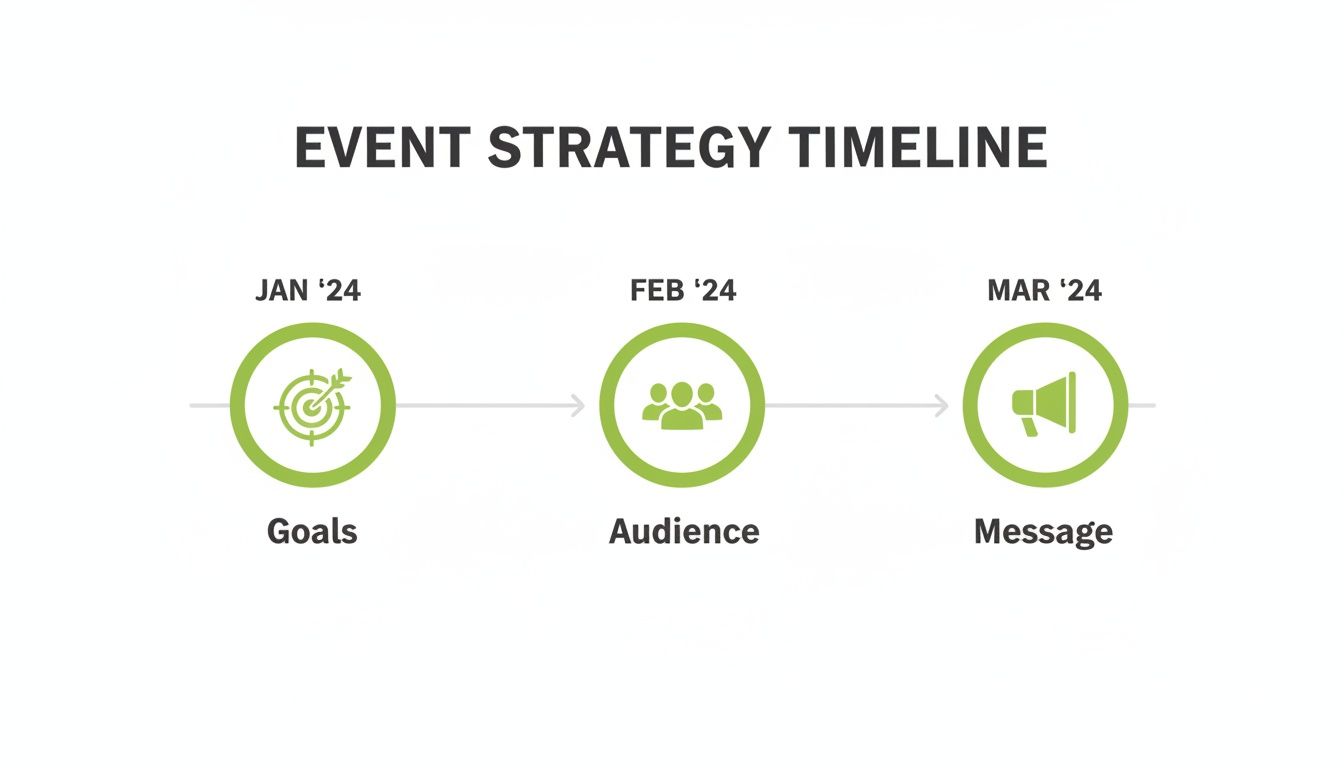
The Early Bird Phase (8–12 Weeks Out)
This is all about laying the groundwork. Your main goal here is to generate that initial buzz and, crucially, secure those first few ticket sales or RSVPs. These early adopters are gold; their commitment acts as social proof, validating your event and giving others the confidence to book.
Right now, your marketing should be laser-focused on your warmest leads—the people who already know and like your brand or cause. We’re talking about your email subscribers, loyal social media followers, and anyone who's attended a past event. They're the most likely to jump on an early offer.
Your key activities in this phase should include:
- Nailing Down the Details: Get your venue, speakers, and the core agenda confirmed. You can’t promote something that’s still up in the air.
- Getting Your Event Page Live: This is the hub for everything—all information and ticket sales need to live here. Make sure it's polished and working perfectly.
- Making the First Announcement: Go public across your main channels. An email to your list and posts on your primary social media profiles are a great start.
- Opening Early Bird Sales: Create a compelling discount to encourage people to act fast. Position it as a special reward for your most loyal supporters.
This initial phase isn't about casting a wide net. It's about deep engagement with your core community. If you can sell just 10-15% of your tickets here, you’ll create a powerful sense of momentum that makes every other phase that much easier.
The Main Promotion Phase (4–8 Weeks Out)
With the initial buzz humming along, it’s time to widen your reach. This is where the activity really ramps up, blending digital campaigns with tangible print materials to capture a much broader audience. Your messaging needs to evolve, too, moving from a simple announcement to highlighting the real value and unique experiences people will get by attending.
This is when you start putting more budget behind paid advertising and outreach. The goal is to move beyond your inner circle and start attracting fresh faces who haven't heard of you before.
During this phase, it's time to intensify your efforts:
- Double Down on Content: Start publishing blog posts, sharing interviews with your speakers, and posting behind-the-scenes content to build a compelling story around your event.
- Launch Targeted Ads: Use paid social ads on platforms like Facebook and LinkedIn to zero in on specific demographics and interest groups who are a perfect fit for your event.
- Get Your Print Materials Out There: Now is the ideal time to distribute your print marketing. Strategically placed posters in community hubs and well-designed leaflets can grab local attention in a way digital just can't. If you're looking for ideas, our high-quality, customisable event flyers are perfect for spreading the word.
The Final Push (1–2 Weeks Out)
The home stretch is all about creating urgency and converting anyone still sitting on the fence. Fear of missing out (FOMO) is your best friend right now. Your audience has probably seen your marketing a few times already; they just need that final nudge to commit.
Your messaging should be direct and action-focused. Use phrases that highlight scarcity, like "tickets are selling fast" or "only a limited number of seats left." It’s also a good time to share final reminders about the schedule, showcase any exciting last-minute additions, and answer common questions to remove any final barriers to booking.
Your last-minute tactics should include:
- Countdown Timers: Add countdown clocks to your emails and social media posts. They're a simple, visual way to build urgency.
- Final Reminder Emails: Send a few short, punchy emails with unmissable calls to action, like "Last Chance to Book!" or "Don't Miss Out!"
- A Social Media Blitz: Up your posting frequency. Share testimonials from past attendees, user-generated content, and final logistical details to keep your event top-of-mind.
Sample Event Promotion Timeline
To pull all this together, here’s a sample timeline you can adapt for your own event. It breaks down what you should be focusing on from 12 weeks out right up to the day itself.
| Timeframe | Key Objectives | Digital Channel Focus | Offline & Print Focus |
|---|---|---|---|
| 12–8 Weeks Out | Build initial awareness, secure early bird sales (10-15% of target). | Launch event landing page, email announcement to subscribers, organic social media posts. | Finalise print designs, order initial batch of flyers & posters. |
| 8–4 Weeks Out | Expand reach, build social proof, drive steady ticket sales. | Paid social ads, content marketing (blogs, speaker spotlights), influencer outreach. | Distribute flyers in high-traffic areas, put up posters in partner venues. |
| 4–2 Weeks Out | Create urgency, convert undecided audience members. | Retargeting ads, email marketing sequences highlighting scarcity, social media blitz. | Distribute a second wave of leaflets with a "last chance" message. |
| 1 Week Out | Maximise last-minute sales, provide key logistical info. | Daily social media countdowns, final reminder emails, update event page with FAQs. | Display posters at the venue entrance, prepare on-site handout materials. |
| Day of Event | Drive on-the-day engagement and future interest. | Live social media coverage (stories, videos), share user-generated content. | Hand out event programmes, feedback forms, and flyers for the next event. |
This timeline provides a solid structure, but remember to stay flexible. Keep an eye on your ticket sales and engagement, and don’t be afraid to adjust your tactics based on what’s working best for your specific audience.
Mastering Digital Event Promotion
Once your timeline is locked in, it’s time to conquer the online world. A strong digital presence isn’t just a nice-to-have anymore; it's the engine that will drive ticket sales and fill your venue. For UK businesses and organisations, knowing which channels to focus on and how to use them effectively is the key to a sold-out event. It all comes down to a smart mix of direct communication, social buzz, and genuinely valuable content that pulls people in.
Every digital touchpoint—from a carefully crafted email to a targeted social media campaign—is a chance to tell your event's story. Your job is to convince your ideal attendee that they simply can’t miss out. It’s about being in the right place, at the right time, with the right message.
Harness the Power of Email Marketing
Even with all the noise on social media, email remains one of the most reliable and direct ways to promote an event. It gives you a direct line to an audience that has already shown interest in what you do. Its importance for UK event organisers can't be overstated—a recent report found that 85% of event planners use email for promotion, cementing its role in building and nurturing attendee databases.
The real secret to great email marketing? Personalisation. Don’t just blast the same generic message to everyone on your list.
- Segment Your Audience: Break your list into groups like 'past attendees', 'new subscribers', or even by location. This lets you send super-relevant messages. For instance, you could offer a loyalty discount to past attendees or highlight local speakers for a specific regional segment.
- Write Subject Lines That Get Opened: Your subject line is your first impression, so make it count. Try a mix of curiosity ("Our secret headliner is…"), urgency ("Early bird tickets end Friday!"), and personalisation ("John, are you joining us in Manchester?").
- Focus on a Single Call-to-Action (CTA): Every email should have one clear goal. Is it to "Buy Tickets," "View the Agenda," or "Learn More"? Too many options just create confusion and kill your click-through rate.
Engage and Excite on Social Media
Social media is where you build a community around your event. Think of it less as a hard sell and more as starting a conversation and generating genuine excitement. The key is to pick the right platforms and create content that gets people talking.
For a professional B2B marketing event, LinkedIn is invaluable for sharing industry insights and speaker profiles. But if you’re promoting a community festival or a political event, Instagram and Facebook are perfect for visual, behind-the-scenes content that builds a much more personal connection.
The best social media promotions feel less like an advert and more like an invitation to be part of something special. It's about showing, not just telling, the value of attending.
Here are a few tactics you can put into action straight away:
- Create a Unique Event Hashtag: Keep it short, memorable, and easy to spell (e.g., #BizConfLDN24). This helps you track conversations and makes it easy for attendees to share their own content.
- Run Targeted Ads: Use the powerful tools on platforms like Facebook and LinkedIn to target users based on their interests, job titles, or location. It’s a surprisingly cost-effective way to reach your ideal attendees well beyond your existing followers.
- Partner with Influencers and Speakers: Ask your speakers or relevant local influencers to share details about the event with their audiences. Make it easy for them by providing a simple promo kit with graphics and suggested copy. You can also use platforms like the Saucial app to streamline social sharing and engagement.
Attract Attendees with Content Marketing
Content marketing is your long game for attracting organic interest. By creating genuinely useful content related to your event's theme, you can grab the attention of potential attendees long before they're even thinking about buying a ticket. This positions you as an expert in your field and builds trust from the get-go.
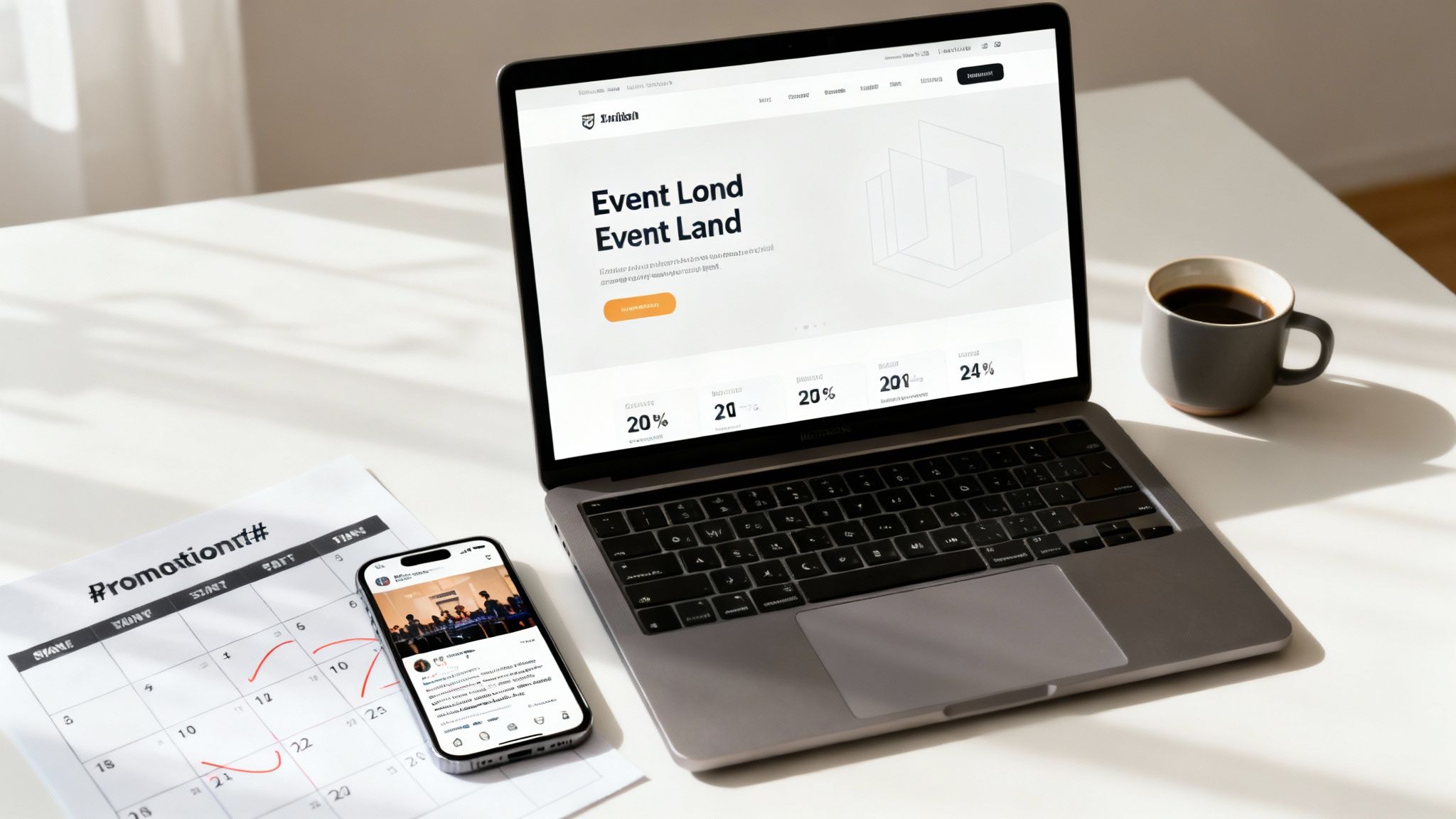
Your event's digital headquarters should be a slick, optimised landing page. It needs to be clear, compelling, and incredibly easy to navigate. Make sure you include all the essential info: what the event is about, who it’s for, the date, location, price, and a big, bold "Register Now" button. High-quality images, video testimonials, and a detailed schedule will help answer every possible question a visitor might have.
Beyond your landing page, a blog can be a powerful promotional tool. Write articles that tackle the pain points your event solves. For example, if you're hosting a digital marketing conference, you could publish posts like "Five SEO Trends UK Businesses Can't Ignore" or "An Interview with Our Keynote Speaker on the Future of AI." This not only gives value to your audience but also naturally drives relevant search traffic straight to your event website.
Leveraging Print for Offline Impact
While your digital campaigns are busy grabbing attention online, don’t forget the powerful, tangible connection that offline marketing can create. In a world of fleeting digital ads, a well-designed flyer or an eye-catching banner offers a physical touchpoint that makes your event feel more real and immediate. It's about taking your promotion into the real world, meeting your audience where they live, work, and socialise.
Offline promotion isn't about replacing your digital efforts; it’s about complementing them. This is especially true for local events, where a strong community presence can make all the difference. Think of it as a pincer movement—digital attracts from a distance, while print engages up close.
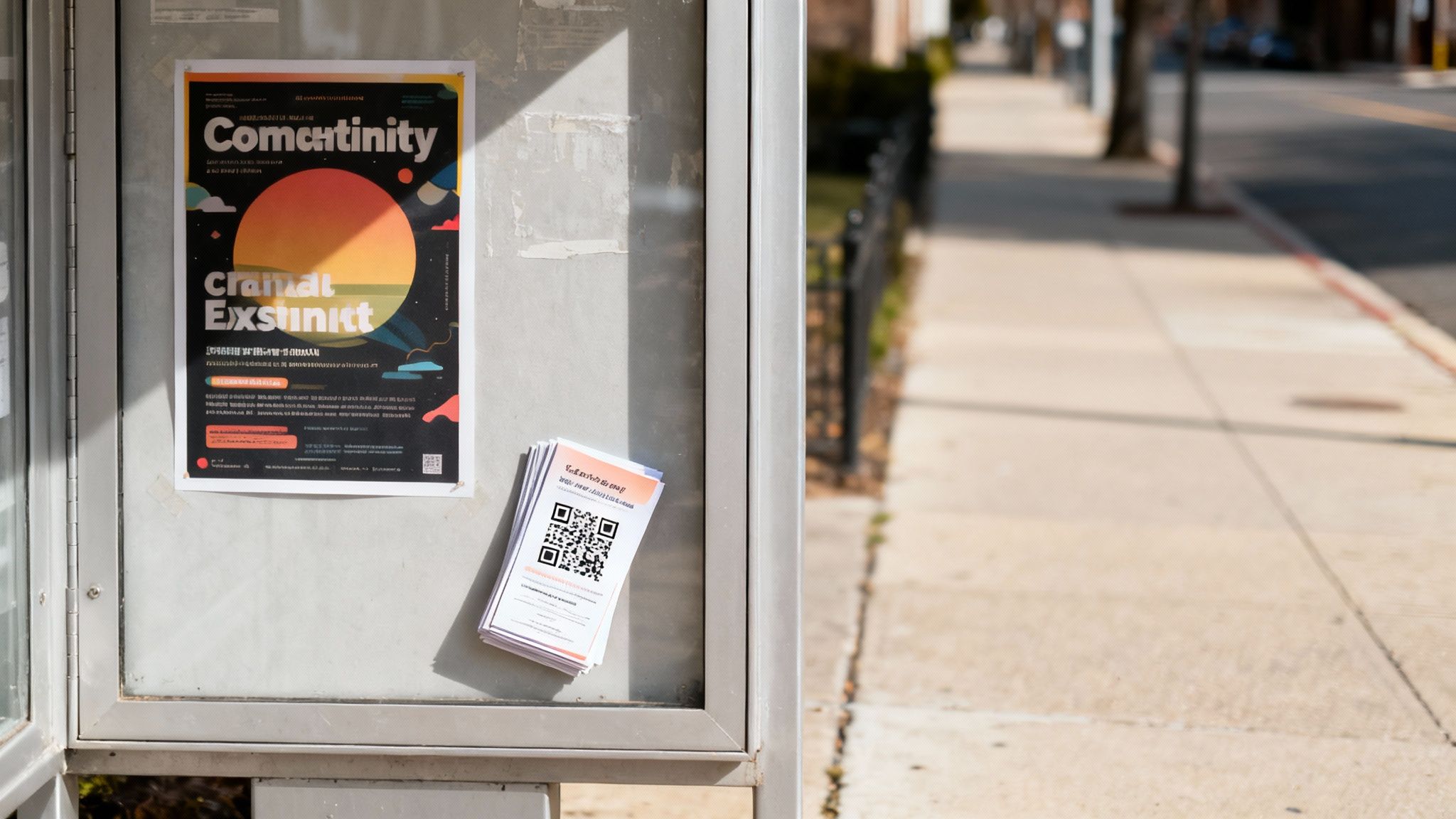
Targeted Flyer and Leaflet Distribution
Flyers and leaflets are classic for a reason—they work. When done right, they deliver your message directly into the hands of potential attendees. The key is strategic distribution, not just blanketing an entire town.
Think about your ideal attendee. Where do they go?
- Coffee Shops and Cafes: Place a stack of high-quality flyers on the counter (with permission, of course).
- Community Centres and Libraries: These are hubs where locals look for information on upcoming events.
- Partner Businesses: If you're running a B2B event, ask non-competing businesses in your sector to display your leaflets.
The design of these materials is crucial. They need to grab attention in a split second. You'll want a bold headline, striking imagery, and clear, concise information: the date, time, location, and what makes your event unmissable. For a deeper dive, our guide on how to decide between flyers or leaflets can help you make the best choice.
High-Impact Posters and Banners
While flyers are for close-up engagement, posters and banners are for capturing attention from a distance. A well-placed poster in a high-footfall area—think busy shopping streets, public transport hubs, or popular community noticeboards—can be seen by hundreds, if not thousands, of people every day.
Outdoor banners take this concept to another level. Made from durable, weather-resistant materials, they are perfect for announcing your event in a big way. A banner placed outside your venue a few weeks in advance acts as a constant reminder and builds local anticipation. To get it right, it's worth checking out some practical tips for creating outdoor event signs that work.
An effective poster isn’t just a bigger flyer. It needs a simpler message, larger fonts, and a single, compelling visual that can be understood in seconds by someone walking past.
Bridging the Physical and Digital Divide
Your print materials should never be a dead end. They must act as a bridge, guiding interested people from the physical world to your online registration page. The easiest and most effective way to do this is with a QR code.
A simple scan can take someone directly to your event landing page, a special ticket offer, or a teaser video. This seamless connection is vital. It removes friction and makes it incredibly easy for someone who sees your poster to take immediate action, rather than having to remember a complex web address later.
This strategy recognises that offline and online channels work best together. Research shows that while 83% of event marketers use social media, 14% of people attend events after being influenced by outdoor ads. It's all about finding that balance.
Lessons from Political Campaigns
For a masterclass in grassroots offline promotion, look no further than political campaigns. They understand the immense power of tangible marketing to build local support and drive action. They effectively use Correx boards in gardens and windows to create a sense of widespread community backing. The sight of multiple boards in a single street is a powerful form of social proof.
Their use of targeted leaflet drops is also incredibly strategic. They don't just canvas randomly; they use detailed voter data to focus on specific neighbourhoods and deliver tailored messages. This approach demonstrates a core principle of offline marketing: know your audience, go where they are, and give them something physical to hold onto. This method builds a powerful, visible presence that digital-only campaigns struggle to replicate.
Keeping the Buzz Alive: During and After Your Event
Your promotion doesn't end when the doors swing open. In fact, what happens on the day and in the week following is where you turn first-time attendees into genuine fans. This is your chance to solidify that brilliant impression you've worked so hard to create, making sure your event leaves a lasting mark.
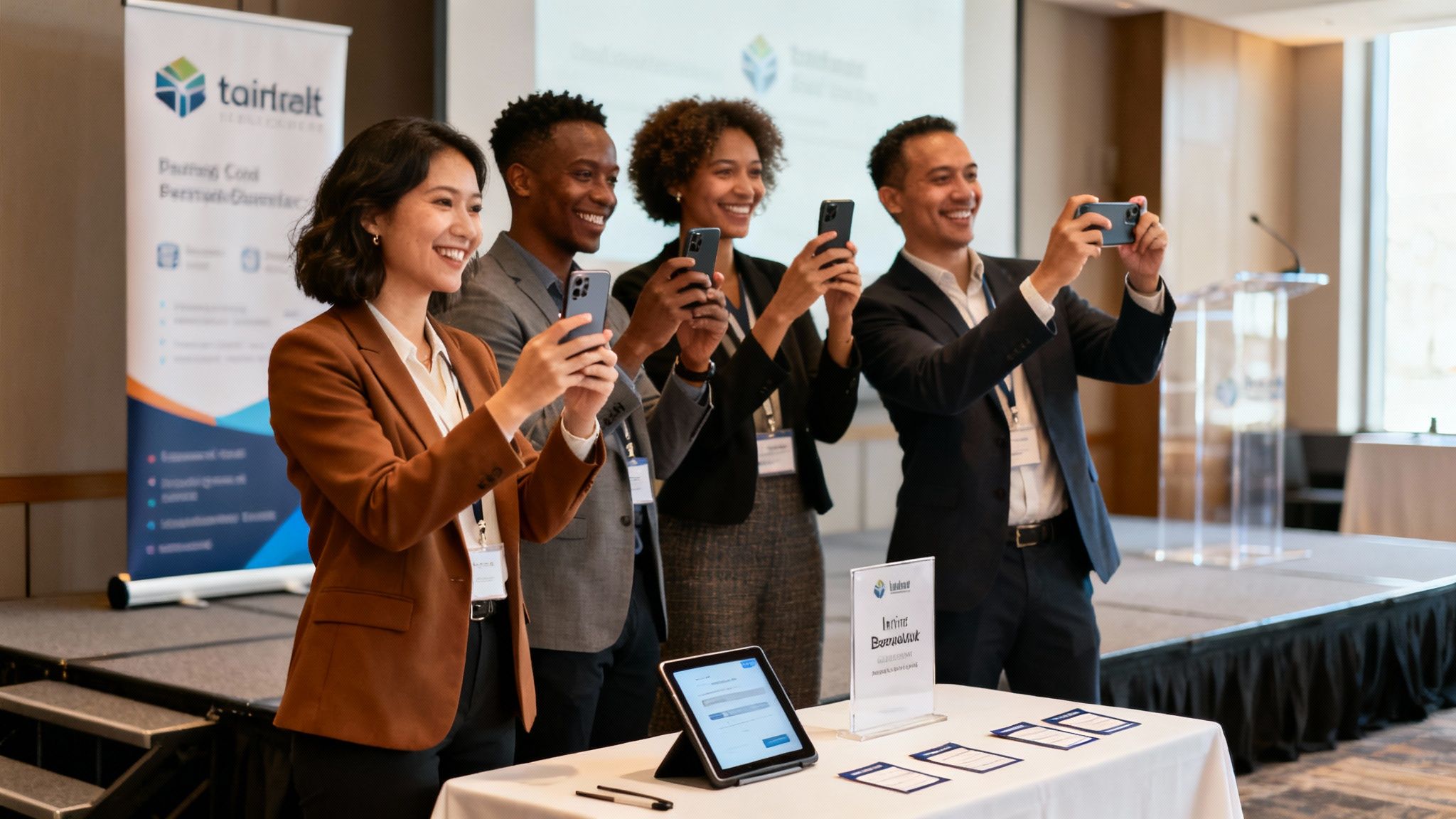
The atmosphere you cultivate during the event is a massive promotional tool in itself. A professional, slick, and well-branded space doesn't just make attendees feel good—it makes them want to share their experience.
Create a Professional On-Site Vibe
From the moment guests arrive, they should know they’re in the right place. A bit of strategic thinking with your print materials can create a cohesive and impressive atmosphere that feels effortless.
- Roller Banners: Pop these up at entrances, registration desks, and beside the stage. They instantly brand the space and can point people in the right direction.
- Clear Signage: Nobody likes feeling lost. Use Foamex boards or posters to clearly signpost different zones, toilets, and coffee stations. Good wayfinding is an underrated part of a great guest experience.
- Branded Touches: Little things go a long way. Think branded notepads and pens for note-takers, or even custom stickers on giveaway bags. For some great ideas on creating memorable, high-quality designs, check out our guide to custom sticker printing in the UK.
These physical elements pull everything together, making your event look polished and organised. It creates the perfect backdrop that people will be happy to snap and share.
Get People Sharing on Social Media, Live!
Your attendees can be your most powerful marketing asset. All you need to do is give them a gentle nudge to share what’s happening in real-time.
Live social sharing is today’s word-of-mouth. It amplifies your event’s reach to a super-relevant audience—the exact people who might come to your next one.
Make it dead simple for them to become your brand advocates. Set up a designated photo booth with decent lighting and a branded backdrop. Display your unique event hashtag everywhere—on screens, banners, and even on the back of name badges. You could even run a simple contest for the "best photo" of the day to get people posting with your hashtag.
Nail Your Post-Event Follow-Up
The conversation shouldn't just fizzle out when everyone goes home. A smart follow-up strategy is what builds a lasting community and gives you priceless feedback for next time.
Your post-event plan should have a few key touchpoints:
- The Thank-You Email: Get a personalised email out within 24 hours. Thank everyone for coming, share a couple of highlights, and maybe include a link to a popular speaker's presentation.
- Photos and Videos: A few days later, share a gallery of professional photos or a snappy highlight reel. This brings back all the good memories and gives people more content to post themselves.
- The Feedback Survey: About a week after, send a short survey asking for their honest thoughts. What did they love? What could be better? This data is pure gold for planning your next event.
This kind of consistent engagement shows you value your attendees beyond their ticket, laying a strong foundation for whatever you plan next.
Your Top Event Promotion Questions, Answered
Even the most seasoned event planners run into questions when the rubber hits the road. To give you a bit of extra confidence, I've pulled together answers to some of the most common queries we hear from UK businesses and organisers.
How Far in Advance Should I Promote an Event?
This is a classic "it depends" question, but there's a good rule of thumb. For most business workshops, local seminars, or community gatherings, starting your promotion 8-12 weeks out is the sweet spot.
This gives you enough time to run a proper promotional cycle. You can launch with an early-bird offer to get those first crucial sign-ups, follow up with a steady stream of content during the main promotion, and then ramp up the urgency in the final week or two.
Of course, a massive conference or a major festival is a different beast altogether. For these, you'll want to start planning and building buzz 6-9 months in advance. That longer lead time is essential for locking in big-name speakers, securing the perfect venue, and generating the kind of momentum a large-scale event needs.
What Is the Best Way to Promote a Local Event?
For local events, a hybrid approach is always king. You need to be where your audience is, and that means combining savvy online tactics with good old-fashioned offline presence. You’re trying to capture people scrolling on their phones and people walking down the high street.
Your online game plan should include:
- Geo-targeted social media ads. You can literally draw a circle on a map and show your ads only to people within a few miles of your venue. It's incredibly powerful.
- Posting in local Facebook groups, community forums, and neighbourhood apps. This is where real local conversations happen.
And for making an impact offline:
- Get high-quality flyers into local cafes, libraries, and friendly independent shops.
- Stick an A-board on the pavement outside your venue on busy days. It’s simple, but it works.
- Put up posters on community notice boards where you know locals will see them.
This two-pronged attack makes sure you’re seen by people actively looking for things to do online and those just going about their day.
The most successful local event promotions are those that feel deeply embedded in the community. It’s not just about advertising; it’s about becoming part of the local conversation.
To make sure your printed materials look sharp and professional, getting the technical details right is a must. Our guide on why bleed is so important in printing will save you a lot of headaches when preparing artwork for your flyers and posters.
How Can I Measure My Promotional Success?
Tracking your success all comes down to the goals you set right at the start. If you don't measure, you're just guessing. It’s vital to keep a close eye on your key performance indicators (KPIs) to see what’s actually working and what’s not.
Here are the essential metrics to watch:
- Ticket Sales: The most obvious one, of course. But dig deeper – track sales by ticket type and see when people are buying. Are they early birds or last-minute deciders?
- Website Traffic: Use UTM codes in your links. This is non-negotiable. It’s how you’ll know if your traffic is coming from your email newsletter, your Facebook ads, or that guest post you wrote.
- Social Media Engagement: Don't just look at likes. Are people sharing your posts? Are they commenting and asking questions? That’s what shows genuine interest.
- Email Open & Click-Through Rates: This tells you how compelling your subject lines and email copy are.
Once the event is over, don't forget to send out a simple attendee survey. A quick question like, "How did you hear about us?" will give you priceless information to make your next event promotion even better.
Ready to bring your event promotion to life with high-quality print? From eye-catching flyers and posters to professional roller banners, The Print Warehouse Ltd has everything you need to make a lasting impression. Explore our full range of products at https://theprintwarehouse.uk and let's get your event noticed.
Share with Friends & Family:
Related Blogs:
Featured Products: